<?xml version="1.0" encoding="utf-8"?><feed xmlns="http://www.w3.org/2005/Atom" ><generator uri="https://jekyllrb.com/" version="3.10.0">Jekyll</generator><link href="http://philippschmidt.org/feed.xml" rel="self" type="application/atom+xml" /><link href="http://philippschmidt.org/" rel="alternate" type="text/html" /><updated>2026-08-07T13:55:02+00:00</updated><id>http://philippschmidt.org/feed.xml</id><title type="html">Philipp Schmidt</title><author><name>Philipp Schmidt</name></author><entry><title type="html">Improving Things is Hard - Why Edtech Innovators Are Not The (Real) Problem</title><link href="http://philippschmidt.org/2026/04/18/Improving-things-is-hard.html" rel="alternate" type="text/html" title="Improving Things is Hard - Why Edtech Innovators Are Not The (Real) Problem" /><published>2026-04-18T00:00:00+00:00</published><updated>2026-04-18T00:00:00+00:00</updated><id>http://philippschmidt.org/2026/04/18/Improving-things-is-hard</id><content type="html" xml:base="http://philippschmidt.org/2026/04/18/Improving-things-is-hard.html"><![CDATA[<h1 id="improving-things-is-hard---why-edtech-innovators-are-not-the-real-problem">Improving Things is Hard - Why Edtech Innovators Are Not The (Real) Problem</h1>

<p>The last few weeks have seen what is by now a well-practiced dance of the pro-edtech and anti-edtech editorialists squaring off.</p>

<p>Sal Khan <a href="https://www.prnewswire.com/news-releases/ets-khan-academy-and-ted-announce-new-institute-to-reimagine-higher-education-for-the-ai-age-302741885.html">announces</a> yet another ambitious new venture from the stage of TED. The anti-edtech pundits, easy to spot by frequent references to Audrey Watters, point out (correctly) that we’ve heard it all before and that technology isn’t the solution. Endless email discussions (and reply-all unsubscribe requests) ensue.</p>

<p>I agree with all of the skepticism about Sal Khan’s latest foray into revolutionizing education. I doubt it will have the impact he is predicting. And I enjoy a snarky take-down of another shiny tech startup as much as the next person. <strong>But I think that maybe we are missing the bigger point.</strong></p>

<p>The critics reference <a href="https://www.educationnext.org/5-percent-problem-online-mathematics-programs-may-benefit-most-kids-who-need-it-least/">Laurence Holt’s work</a> and remind us that only 5% of users are engaging with Khanmigo. And they quote Kristen DiCerbo’s statement that users are not good at asking questions. Suggesting that, once again, technology developers are missing the mark.</p>

<p>But isn’t it a concern that students, after many years of school education, are not prepared to ask good questions or feel motivated to try out new ways to learn maths? That doesn’t seem like a technology problem alone, but an education system problem.</p>

<p>At MIT there’s a group that studies System Dynamics and one of the insights from decades of research is that we have <a href="https://news.mit.edu/2012/manufacturing-beer-game-0503">a tendency to blame individuals</a>, when we should really be looking at systems and structures that shape behavior. Education innovation might be a perfect example.</p>

<p>It’s entirely possible that Khan’s enthusiasm is misguided, and the edtech marketing hype is often nauseating, but the bigger problem that doesn’t seem to inspire the same passionate debates is that we are failing learners and teachers.</p>

<p>There are plenty of motivated passionate teachers and administrators, who are struggling to do the work they love. Too many students are being left behind and for the ones that make it to, and maybe even through college, employers report they still don’t have the right skills when they graduate.</p>

<p>Those are hard and important problems to work on and we need all the help we can get, from people trying to build better edtech, but also innovators in pedagogy, policy, and finance - even if not all or our efforts work. Technology alone can’t be the solution, but in a world where AI is upending much we know about learning and jobs, it also can’t not be part of the solution.</p>

<p>In the case of Khan, it’s worth pointing out that a lot of the hard lessons learned have been shared publicly. There are <a href="https://blog.khanacademy.org/research/">research reports</a> and case-studies that document how things have worked (or not) and why. That way the whole field can learn and move forward.</p>

<p>Is it possible that five years from now, Sal Khan gives another TED talk to launch a new ambitious venture and acknowledges that the ETS/Khan/TED Institute didn’t quite work as well as he had hoped? I think the answer is yes, and the money and energy could have been spent elsewhere, but if it was obvious how to improve education - we wouldn’t be in this situation in the first place.</p>]]></content><author><name>Philipp Schmidt</name></author><category term="learning" /><category term="education" /><summary type="html"><![CDATA[Improving Things is Hard - Why Edtech Innovators Are Not The (Real) Problem]]></summary></entry><entry><title type="html">The Cost of Convenience</title><link href="http://philippschmidt.org/2024/08/22/Cost-of-Convenience.html" rel="alternate" type="text/html" title="The Cost of Convenience" /><published>2024-08-22T00:00:00+00:00</published><updated>2024-08-22T00:00:00+00:00</updated><id>http://philippschmidt.org/2024/08/22/Cost-of-Convenience</id><content type="html" xml:base="http://philippschmidt.org/2024/08/22/Cost-of-Convenience.html"><![CDATA[<h1 id="the-cost-of-convenience">The Cost of Convenience</h1>

<p>On the surface, convenience (“the state of being able to proceed with something with little effort or difficulty”) is great. It means, we can get more things done more easily.</p>

<p>But there are unintended consequences (or costs) of increased convenience.</p>

<ul>
  <li>
    <p>For learning, more convenience, may ironically mean less learning as the brain has to “struggle” to a certain degree to form new synapses.</p>
  </li>
  <li>
    <p>For navigation, the convenience of GPS means we don’t have clear mental models of the locations we move within anymore (and potentially, we lose the ability to form those mental models).</p>
  </li>
  <li>
    <p>When moving around, cars and electric bikes allow us to move faster and further, but we might end up weakening our bodies, because we’re not using them as much.</p>
  </li>
</ul>

<p>Ironically, the other meaning of “convenience” is “a public restroom”.</p>]]></content><author><name>Philipp Schmidt</name></author><summary type="html"><![CDATA[The Cost of Convenience]]></summary></entry><entry><title type="html">Delegation &amp;amp; Decisions</title><link href="http://philippschmidt.org/2022/02/06/delegation-and-decisions.html" rel="alternate" type="text/html" title="Delegation &amp;amp; Decisions" /><published>2022-02-06T00:00:00+00:00</published><updated>2022-02-06T00:00:00+00:00</updated><id>http://philippschmidt.org/2022/02/06/delegation-and-decisions</id><content type="html" xml:base="http://philippschmidt.org/2022/02/06/delegation-and-decisions.html"><![CDATA[<h1 id="delegating-work--making-decisions">Delegating Work &amp; Making Decisions</h1>

<p>On any size team, the process of delegation has an effect not only how efficiently work moves forward, but also how much ownership individual team members experience over their work.</p>

<p>Delegation happens whenever groups of people are trying to get something done. Often, a more senior team member will delegate work to more junior members. But equally important is when peers delegate work to each other, or when a junior team member “manages up”.</p>

<p>A friend who works at a FAANG once remarked that “tactics is for amateurs” and explained that he only focuses on <em>strategy</em> when meeting with staff members he manages. In other words, he focuses on the <em>why</em> and to some degree the <em>what</em>, but not the <em>how</em>. In my experience the distinction between the <em>what</em> and the <em>how</em> is not always a crisp line, but more of a blurry area, but the general direction of this advice makes sense.</p>

<p>However, when members of the team are faced with a decision, they may not feel confident that it’s “ok” to take the decision without asking for input from others or even approval. They may not know if the decision has been delegated to them. I recently had an exchange with someone who had made a (good) decision, but was worried that the decision had been taken relatively quickly without having a chance to get other people to weigh in.</p>

<p>To have a better mental model for situations like this, I tried to come up with a few heuristics for how we can make decisions, that could be applied to everyone on the team equally. Let’s consider the following four parameters (the four Rs). The first two are essential, the second two are useful.</p>

<ul>
  <li><strong>Reversibility</strong> — Is this decision very hard to reverse?</li>
  <li><strong>Risk</strong> — What’s the level of risk, e.g. if we take the wrong decision, could it sink the project (or the company)?</li>
</ul>

<p>If the answer to both of these questions is “No”, e.g. we can reverse a decision and it couldn’t sink the project, then it’s generally ok to go ahead and make the decision with less input from others.</p>

<p>On the other hand, if the answer is “Yes” or even “Maybe” it’s a good indicator that it is important to get buy-in from the right people. Furthermore, it’s useful to consider:</p>

<ul>
  <li><strong>Urgency</strong> — Do I have time to think about this more?</li>
  <li><strong>Resources</strong> — Do I need the help of other people in order to implement the decision (and is this a change to what they are doing right now)?</li>
</ul>

<p>Again, if the answer is “No” to these two, it’s a good indicator that it’s ok to make the decision. Only my work is directly affected, and there is a reason why the decision needs to be made right away. On the other hand, if the answers are “Yes” or “Maybe” then we have more space to involve other people, either to get their feedback or to ask them to sign-off.</p>

<p>In general, I think it’s good to aim for open and transparent decision-making, and letting other people chime in. So even when it’s not strictly necessary, I think it’s a good idea to give other team members a chance to weigh in or provide feedback. At the same time, it’s important that one person ultimately has the authority to make the decision.</p>]]></content><author><name>Philipp Schmidt</name></author><summary type="html"><![CDATA[Delegating Work &amp; Making Decisions]]></summary></entry><entry><title type="html">Hello Again World</title><link href="http://philippschmidt.org/2022/01/06/hello-again-world.html" rel="alternate" type="text/html" title="Hello Again World" /><published>2022-01-06T00:00:00+00:00</published><updated>2022-01-06T00:00:00+00:00</updated><id>http://philippschmidt.org/2022/01/06/hello-again-world</id><content type="html" xml:base="http://philippschmidt.org/2022/01/06/hello-again-world.html"><![CDATA[<h1 id="all-this-talk-of-web3">All this talk of Web3</h1>

<p>While everyone is focused on minting NFTs and declaring the end of the centralized power structures of platform capitalism (or fleeing into an updated version of SecondLife that has only one enthusiastic inhabitant, Mark Z, who is also the owner, landlord, designer, and makes the weather) I find myself weirdly excited about the good old Web 1.0.</p>

<p>Maybe this is the moment to go back to the earlier days of the web and make some adjustments (aka try again) rather than keep storming forward into a future information ecosystem that is likely to be more centralized than less.</p>

<p>There certainly seems to be an increasing interest in public infrastructure for information, e.g. open-source based services that are supported by a mix of government, non-profit, and commercial users. I see people dusting off their RSS readers (please hold the comments about vinyl!) and some of the voices from the past are starting to pop up on my radar again. Or maybe I’m just looking again in places I haven’t looked in for a while.</p>

<p>Anyway, it feels like something is in the air and I’m excited to see if we can’t make it grow into a real alternative to the monolithic platforms and a new way of thinking about sustainable technology infrastructure.</p>]]></content><author><name>Philipp Schmidt</name></author><summary type="html"><![CDATA[All this talk of Web3]]></summary></entry><entry><title type="html">Tablets on tables</title><link href="http://philippschmidt.org/2016/05/13/tablets-on-tables.html" rel="alternate" type="text/html" title="Tablets on tables" /><published>2016-05-13T00:00:00+00:00</published><updated>2016-05-13T00:00:00+00:00</updated><id>http://philippschmidt.org/2016/05/13/tablets-on-tables</id><content type="html" xml:base="http://philippschmidt.org/2016/05/13/tablets-on-tables.html"><![CDATA[<h1 id="new-study-measures-the-wrong-things-to-show-negative-effect-of-digital-tools-in-the-classroom">New study measures the wrong things to show negative effect of digital tools in the classroom</h1>

<p>A new study by MIT colleagues (<a href="https://seii.mit.edu/research/study/the-impact-of-computer-usage-on-academic-performance-evidence-from-a-randomized-trial-at-the-united-states-military-academy/">the actual study</a> / <a href="http://www.theguardian.com/education/2016/may/11/students-who-use-digital-devices-in-class-perform-worse-in-exams">the guardian’s post about it</a>) on the negative effects of digital tools in the classroom is a good example of why I am frustrated with a lot of education research.</p>

<p>The authors show that students in an introductory Economics course at West Point Academy performed significantly worse on class assessments if they were allowed to use laptops, phones or tablets during the classes. That seems shocking, and will–no doubt–be used by those who are critical of digital learning technology to suggest we should abolish these tools from the classroom.</p>

<p>We all know that having digital tools around and using them to access the Internet can be distracting, and there is plenty of evidence that context switching is the number one killer of sustained cognitive activity. But there are issues with this type of study.</p>

<p>It measures success as exam scores. That’s what we usually do in education. Yet we don’t challenge the quality of the assessment enough. Because for many assessments there is at most a short-term and relatively tenuous relationship between scores and actual learning. And in fact, the study finds that there was only a negative effect when looking at the results from those assessments that are least able to recognize deeper learning and understanding: “permitting laptops or computers appears to reduce multiple choice and short answer scores, but has no effect on essay scores”.</p>

<p>Secondly, the computers were not used to support the learning activities in any thoughtful way. They were simply permitted as note taking devices. So, the study really shows that note taking on a computer or laptop is more distracting than note taking on a piece of paper, when sitting in an Economics class. However, even The Guardian, picked up a very different conclusion, that digital tools decrease academic performance.</p>

<p>Maybe we should inverse the study’s conclusion and instead of pointing the finger at distracted students, challenge professors, and redesign curricula, to make learning more meaningful and engaging. The course was based around a standard economics textbook and online assessments. We don’t see negative effects on learning when kids are developing Scratch projects, or building Minecraft worlds, and computers have much less power to distract when learners are working in a maker space on physical projects. However, if they are sitting in a lecture, listening to a professor going through the chapters of a textbook, they are more likely to look for distraction. Who can blame them?</p>]]></content><author><name>Philipp Schmidt</name></author><summary type="html"><![CDATA[New study measures the wrong things to show negative effect of digital tools in the classroom]]></summary></entry><entry><title type="html">Eating in Paris</title><link href="http://philippschmidt.org/food/2016/05/04/Paris.html" rel="alternate" type="text/html" title="Eating in Paris" /><published>2016-05-04T00:00:00+00:00</published><updated>2016-05-04T00:00:00+00:00</updated><id>http://philippschmidt.org/food/2016/05/04/Paris</id><content type="html" xml:base="http://philippschmidt.org/food/2016/05/04/Paris.html"><![CDATA[<h1 id="eating-in-paris">Eating in Paris</h1>

<p>Also check out: <a href="http://1l2p.net/2014/06/06/Eating-in-Berlin.html">Berlin</a> / <a href="/2014/07/29/Boston-Tips.html">Boston</a> / <a href="/2015/06/15/Eating-in-NYC.html">New York</a></p>

<p>A few personal favorites (I’ll try to keep the list updated).</p>

<p><strong>Fish Lab Boissonnerie</strong> - An English titled fish restaurant in Paris. Casual, but cool crowd. Great fish (obviously) and good vibes. Seems popular with the expats, acting local, and desperately hoping to not be mistaken for tourists. That makes it sound worse than it is. Good choice for a meal with friends. <a href="https://www.facebook.com/Fish-La-Boissonnerie-156620904372928/">Link</a></p>

<p><strong>Breizh Cafe</strong> - Bretonne crepes made by a Japanese chef. What could go wrong? Nothing. They seem to be expanding, both in Paris and internationally, but I prefer eating at the one communal table in the deli extension in the Marais (they call it the Paris Grocery on the website). Go with a friend, so you can share two savory and end on one sweet. <a href="http://breizhcafe.com/en/">Link</a></p>

<p><strong>Rose Bakery (and cafe)</strong> - The original Rose Cafe and bakery. Simple. Great. Simply great. They also have branches at some of the Dover Street Market stores, but this is the original one. Great cook book also. <a href="https://www.facebook.com/pages/Rose-Bakery/164385533573542">Link</a></p>

<p><strong>Tiki Bar Dirty Dick</strong> - There is nothing a hipster loves more than a tiki bar in a formerly seedy red light district. Run by Americans. Or Australians. Or whatever. They have beards and tattoos. Great drinks also. And there is a good bar with a tiny dancefloor across the street. You can go back and forth. <a href="http://www.lephysionomiste.fr/bar/dirty-dick/">Link</a></p>

<p><strong>Berthillon Ice Cream</strong> - Perfect refreshment during a long stroll across Paris. The lines are always long, but it’s fun watching people in crazy anticipation (and trying to decide which of the amazing flavors to try). A bunch of other places, some nearby, sell the same ice cream, but somehow it’s better if you wait in the longest line at the original place. <a href="http://www.berthillon.fr/">Link</a></p>

<p><strong>Le Jules Verne</strong> - Haven’t been, and I’m sure it’s ridiculously overpriced, but how could a gourmet restaurat on top of the world’s most iconic tower not be amazing. Apparently Jean Paul Gautier’s favorite restaurant. One day! <a href="http://www.lejulesverne-paris.com/en">Link</a></p>]]></content><author><name>Philipp Schmidt</name></author><category term="food" /><category term="paris" /><category term="tips" /><category term="food" /><summary type="html"><![CDATA[Eating in Paris]]></summary></entry><entry><title type="html">Certificates, Reputation, and the Blockchain</title><link href="http://philippschmidt.org/2015/10/27/certificates-reputation-blockchain.html" rel="alternate" type="text/html" title="Certificates, Reputation, and the Blockchain" /><published>2015-10-27T00:00:00+00:00</published><updated>2015-10-27T00:00:00+00:00</updated><id>http://philippschmidt.org/2015/10/27/certificates-reputation-blockchain</id><content type="html" xml:base="http://philippschmidt.org/2015/10/27/certificates-reputation-blockchain.html"><![CDATA[<h1 id="certificates-reputation-and-the-blockchain">Certificates, Reputation, and the Blockchain</h1>

<p>(Crossposted to <a href="https://medium.com/mit-media-lab/certificates-reputation-and-the-blockchain-aee03622426f#.rgm5rdnwb">Medium</a>)</p>

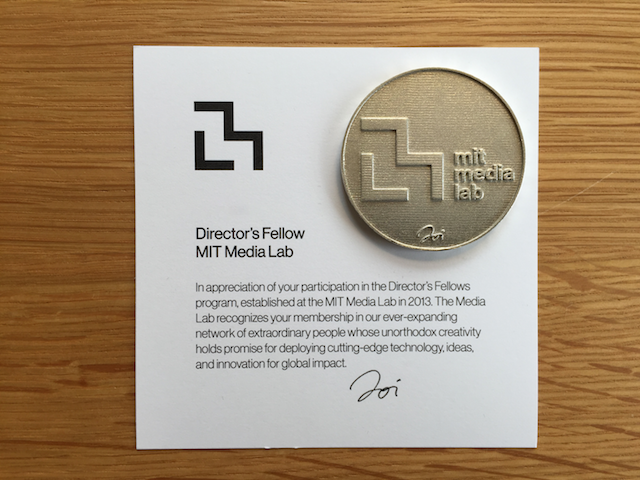
<p>Earlier this year, the MIT Media Lab started issuing digital certificates to groups of people in our broader community. We use certificates as a way to recognize contributions we value, or simply to signal membership in the Media Lab family. For example, in July we issued coins and certificates to all of the <a href="https://www.media.mit.edu/people/?filter=directors-fellow">Media Lab Director’s Fellows</a>. The coins are physical representations of <a href="https://certs.media.mit.edu/8ca9cad234bdc2136532072e4a01b4898d45ef128d0cec499e76903787b9430d">digital certificates</a> (see below).</p>

<p><img src="http://philippschmidt.org/images/ml-certificates.png" alt="Coin" /></p>

<h2 id="designing-an-open-platform-for-digital-certificates">Designing an Open Platform for Digital Certificates</h2>

<p>Certificates are signals of achievement or membership and some are more important than others. University degrees (a particular type of certificate) can help you get the job you want, or prevent you from getting it if you don’t have the right certificate. Our current, mostly analog system for managing certificates is slow, complicated, and unreliable. There are many advantages for creating a digital infrastructure for certificates, but the stakes are high since such a system could grow to represent our professional reputations. We need to be thoughtful about its design, and the type of institutions we trust to govern it.</p>

<h2 id="the-journeymen-history-of-certificates">The Journeymen History of Certificates</h2>

<p>When we lived in small tight-knit communities, people knew whom they could turn to when they needed an expert (and whom to avoid). However, as we started moving around more and our lives and networks grew, we needed to come up with portable ways to signal our expertise to new acquaintances. Some of these original systems are still in place. For example, in Germany many carpenters still do an <a href="https://en.wikipedia.org/wiki/Journeyman_years">apprenticeship tour</a> that lasts no less than three years and one day. They carry a small book in which they collect stamps and references from the master carpenters with whom they work along the way. The carpenter’s traditional (and now hipster) outfit, the book of stamps they carry, and — if all goes well — the certificate of acceptance into the carpenter guild are proof that here is a man or woman you can trust to build your house.</p>

<p><img src="https://upload.wikimedia.org/wikipedia/commons/thumb/3/33/Wandergeselle_02.JPG/640px-Wandergeselle_02.JPG" alt="Wandergeselle" /></p>

<p>“Wandergeselle 02” by Sigismund von Dobschütz — CC BY-SA 3.0 via Wikipedia Commons</p>

<p>Ideally we should be in charge of our own credentials, similar to the journeymen carpenters who carry around their books of stamps and references. But most of the time we have to rely on third parties, such as universities or employers to store, verify, and validate our credentials. Job seekers have to request official transcripts from their alma maters (and typically pay a small fee), and employers still need to call the university if they want to be sure that a transcript wasn’t faked. It’s a slow and complicated process, which is one reason why degree fraud is a real issue. (A few years back, even our very own MIT Admissions office realized that its <a href="http://www.nytimes.com/2007/04/27/us/27mit.html">Dean didn’t actually have the undergraduate degree</a> that she had listed in her application). Making certificates transferable and more easily verifiable is one advantage of digital systems.</p>

<p><img src="https://upload.wikimedia.org/wikipedia/commons/thumb/3/3c/Wanderbuch2.jpg/607px-Wanderbuch2.jpg" alt="Wanderbuch" /></p>

<p><em>“Wanderbuch” by Magistrate der Königl. Freystadt Oedenburg im Königreiche Ungarn / Public Domain</em></p>

<h2 id="an-open-platform-for-reputation">An Open Platform for Reputation</h2>

<p>The trail of credentials and achievements that we generate throughout our lives says something about who we are, and it can open doors that allow us to become who we want to be. Some credentials, such as university degrees, are more important than others. But at the end of the day, all of these credentials represent experiences that are part of our lives.</p>

<p>There are many advantages for recipients to have more control over the certificates they earn. Being in control doesn’t mean it would be easy to lie. Similar to the carpenter’s book of references, it should not be possible to just rip out a few pages without anyone noticing. But being in control means having a way to save credentials, to carry them around with us, and to share them with an employer if we chose to do so (without having to pay, or ask for the issuer’s permission or cooperation).</p>

<p>In order to make that happen we need an open platform for digital certificates and reputation. Using the blockchain and strong cryptography, it is now possible to create a certification infrastructure that puts us in control of the full record of our achievements and accomplishments. It will allow us to share a digital degree with an employer while giving the employer complete trust that the degree was in fact issued to the person presenting it.</p>

<p>This is exciting because it is not only a better way to deal with the way certificates work today, but it is also an opportunity to think about what certificates may look like in the future. A few years ago, I co-authored a <a href="https://wiki.mozilla.org/images/b/b1/OpenBadges-Working-Paper_092011.pdf">white paper</a> with Mozilla on digital badges (just another name for certificates) in which we set out some of these core ideas. What was missing at the time was the technical infrastructure that would let us reliably store and manage the certificates. Enter the blockchain.</p>

<p>The blockchain is best known for its connection to the <a href="https://en.wikipedia.org/wiki/Bitcoin">cryptocurrency bitcoin</a>. But in essence it is a just a distributed ledger to record transactions. What makes it special is that it is durable, time-stamped, transparent, and decentralized. Those characteristics are equally useful for managing financial transactions, as for a system of reputation. In fact you can think of reputation as a type of currency for social capital, rather than financial capital.</p>

<h2 id="how-itworks">How It Works</h2>

<p>Issuing a certificate is relatively simple: we create a digital file that contains some basic information such as the name of the recipient, the name of the issuer (MIT Media Lab), an issue date, etc. We then sign the contents of the certificate using a private key to which only the Media Lab has access, and append that signature to the certificate itself. Next we create a hash, which is a short string that can be used to verify that nobody has tampered with the content of the certificate. And finally we use our private key again to create a record on the Bitcoin blockchain that states we issued a certain certificate to a certain person on a certain date. Our system makes it possible to verify who a certificate was issued to, by whom, and validate the content of the certificate itself.</p>

<h2 id="whats-next">What’s Next?</h2>

<p>We will continue to develop our software tools and issue certificates to members of the Media Lab community. We will also start releasing software under an open source license so that others can review it, extend and improve our work, or just learn from it. And we are collaborating with MIT’s Digital Currency Initiative to explore some of the privacy implications and technical infrastructure questions.</p>

<p>In addition, we are actively looking for collaborators to build out a few example implementations outside the Media Lab. Areas in which digital certificates provide exciting opportunities include:
		Corporate/ enterprise training — Many large companies offer a myriad of training opportunities to their employees, but they lack systems to reliably track and store the results. Existing HR systems are often monolithic and don’t talk to other corporate databases, there are no consistent ways to compare skills, and accomplishments are not portable.
		Workforce development — There are millions of apprenticeship records and certificates, but no systems to manage them. This is especially an issue for the 36M adults in the US with low skills, who often lack other more recognized diplomas or degrees.</p>

<p>Interested in learning more? Get in touch with us at coins@media.mit.edu and follow our research updates at http://certificates.media.mit.edu.</p>

<p>Philipp Schmidt is Director of Learning Innovation at the MIT Media Lab. He works with a team of students, designers, and researchers to enhance the Media Lab’s learning culture and community, and liaises with member companies and other partners to promote creative learning outside the Media Lab.</p>]]></content><author><name>Philipp Schmidt</name></author><category term="blockchain," /><category term="bitcoin," /><category term="certificates," /><category term="credentials," /><category term="blockcerts" /><summary type="html"><![CDATA[Certificates, Reputation, and the Blockchain]]></summary></entry><entry><title type="html">Eating in NYC</title><link href="http://philippschmidt.org/food/2015/06/15/Eating-in-NYC.html" rel="alternate" type="text/html" title="Eating in NYC" /><published>2015-06-15T00:00:00+00:00</published><updated>2015-06-15T00:00:00+00:00</updated><id>http://philippschmidt.org/food/2015/06/15/Eating-in-NYC</id><content type="html" xml:base="http://philippschmidt.org/food/2015/06/15/Eating-in-NYC.html"><![CDATA[<h1 id="eating-in-nyc">Eating in NYC</h1>

<p>Also check out: <a href="http://1l2p.net/2014/06/06/Eating-in-Berlin.html">Berlin</a> /  <a href="/2014/07/29/Boston-Tips.html">Boston</a></p>

<p>A few personal favorites (I’ll try to keep the list updated)</p>

<p><strong>Rebelle</strong> - Fancy, but not schmancy, or overly expensive. Great french food by an American chef. Amazing wine list and staff who love to geek out on the funkier side of the cellar. Order the “angular” Chenin Blanc if you’re in the mood. (Last visit: May 2015)</p>

<p><strong>Russ &amp; Daughers (Deli)</strong> - The original Russ &amp; Daughter’s Deli is a must for anyone interested in food or NY. Get a take-away bagel sandwich, walk two blocks to the West, and watch some pretty good pick-up basketball action. The recently opened cafe has great bloody mary’s. (Last visit: June 2015)</p>

<p><strong>Ippudo West</strong> - The mid-town branch of second wave Ramen sensation (first wave = Momofuku). Less hipster, less crowded, less loud - but better food than the downtown twin. (Last visit: 2014)</p>

<p><strong>Mission Chinese</strong> - Fake take-out Chinese front on Lower East Side opens up into hipster joint in the back. They often play hip-hop. That’s a good thing. Go late, or put your name on the list and wander around the neighborhood. (Last visit: 2014)</p>

<p><strong>M. Wells Dinette @ PS1</strong> - The recently added steak house is hit or miss, but the lunch spot inside the PS1 delivers. It’s quirky, and interesting, and generally over the top, and highly recommended. (Last visit: Feb 2015)</p>

<p>Haven’t been, but want to go:</p>

<p><strong>Roberta’s</strong> - The Brooklyn pizza joint.</p>]]></content><author><name>Philipp Schmidt</name></author><category term="food" /><category term="nyc" /><category term="food" /><summary type="html"><![CDATA[Eating in NYC]]></summary></entry><entry><title type="html">Mozilla Developer Institute</title><link href="http://philippschmidt.org/2015/05/01/mozilla-developer-institute.html" rel="alternate" type="text/html" title="Mozilla Developer Institute" /><published>2015-05-01T00:00:00+00:00</published><updated>2015-05-01T00:00:00+00:00</updated><id>http://philippschmidt.org/2015/05/01/mozilla-developer-institute</id><content type="html" xml:base="http://philippschmidt.org/2015/05/01/mozilla-developer-institute.html"><![CDATA[<h1 id="a-mozilla-developer-institute">A Mozilla Developer Institute</h1>

<p><em>TL;DR - Why Mozilla should create an Mozilla Developer Institute in order to train the next generation of technology inventors. And how Mozilla could do this by building on existing resources.</em></p>

<p>A few weeks ago, Mark blogged about a concept called <a href="https://commonspace.wordpress.com/2015/03/31/building-an-academy/">Mozilla Academy</a> as part of Mozilla’s broader vision. And he asked “What does a Mozilla Academy look like?”</p>

<p>Here is one piece of the answer:</p>

<p>Within the broader Academy framework, Mozilla could launch a Mozilla Developer Institute that provides high-end training for technologists, who will create the open technology infrastructure of the future.</p>

<p>Such an institute would serve an important need. It’s an idea that Mozilla would be well positioned to pursue. And it’s something the MIT Media Lab (where I work) might be able to help with.</p>

<p><strong>Mozilla Institute of Technology</strong></p>

<p>Creating a top training program for technology architects, designers and developers. The Institute is designed for advanced technologists, but all content is shared openly, and learning happens in the open so that others can build on it.</p>

<p>The Institute offers:</p>

<ul>
  <li>A better alternative to expensive outdated university programs, or to bootcamp style start-up programs. Graduates will have excellent career prospects.</li>
  <li>A flexible curriculum and format, that emphasizes the broader context of technology design, and adapts to the time and location-preferences of its learners.</li>
  <li>Access to a community of top developers who care about the influence of technology on the world they live in.</li>
</ul>

<p><strong>Hands-on relevant learning, online &amp; offline</strong></p>

<p>Learning doesn’t take place in lectures, but through participation in real meaningful projects, and by working with other developers.</p>

<ul>
  <li>A flexible format, in which students design their own course of study.</li>
  <li>Face-to-face masterclasses, and seminars, offered at Mozilla offices.</li>
  <li>Student work on “real-world” problems, interacting with the Mozilla developer community. Coding challenges offer hard problems to tackle.</li>
  <li>A peer-to-peer learning culture and community. Experienced Mozillians act as mentors and guides.</li>
  <li>An open library of video tutorials, worked examples, and reference documentation for self-study.</li>
</ul>

<p><strong>Bootstrapped by building on existing resources</strong></p>

<p>The Institute doesn’t need to be a huge new undertaking. It can get started quickly, by building on the pieces that are already in place.</p>

<ul>
  <li>Knowledge &gt; The <a href="https://developer.mozilla.org/en-US/">Mozilla Developer Network</a> has already developed a vast library of reference and learning materials. And it supports an active community of users, some of whom might be interested in helping design (or participate in) the institute.</li>
  <li>People &gt; Tapping into Mozilla’s culture of peer-to-peer learning and open sharing, the institute could quickly launch seminars and mentorship. Mozilla employees and core community members could volunteer as mentors, design coding challenges, and teach master-classes or seminars.</li>
  <li>Spaces &gt; Host face-to-face events at Mozilla offices. As a starting point, the institute could simply offer new programming in existing meeting rooms or conference venues. There is no need to invest in expensive real estate.</li>
</ul>

<p><strong>Offering a path to careers and impact</strong></p>

<p>Graduates have excellent career prospects, deep technology skills, an amazing network of Mozillians, and a well rounded understanding of the challenges and power of designing technology for millions of users.</p>

<ul>
  <li>Graduates have mastered today’s cutting edge technologies (full-stack web development, mobile, blockchain …)</li>
  <li>Portfolios demonstrate their skills and accomplishments (instead of degrees).</li>
  <li>Job fairs, and internships, offer connections to employers throughout the program.</li>
</ul>

<p><strong>Over to you &gt; I’d love to get your reactions to the blueprint above. Does this sound like a useful piece of the overall Mozilla Academy? What’s missing? Which parts make sense, which ones need more work?</strong></p>

<p><strong>Background, details, context…</strong></p>

<p>I am mainly interested in comments and reactions to the above part, but if you’d like to find out more about the background of this idea, why I think it’s important, and why Mozilla could be in a unique position to tackle this problem, feel free to read on.</p>

<p><em>The problem with technology training</em></p>

<p>The way we train technologists today, doesn’t emphasize how broad the impact of their decisions can be on our economy and society. Traditional computer science education as well as the growing number of alternatives, focus on technical skills first (and markets second).</p>

<p>However, as <a href="http://codev2.cc/download+remix/Lessig-Codev2.pdf">Lawrence Lessig has pointed out</a>, the rise of network technology has upended the traditional ways that society organized behaviors: through norms, markets, laws, and architecture (infrastructure).</p>

<p>The ability to shape behavior through technology infrastructure is both uniquely <em>concentrated</em> (a few developers can develop tools that are used by billions of people), and <em>influential</em>: technology can quickly shape new norms (such as widespread file-sharing), create new markets (airbnb), and make it harder to apply existing laws.</p>

<p>Most technology training doesn’t cover this. Not coincidentally, <a href="http://en.wikipedia.org/wiki/Lawrence_Lessig">Lessig</a> teaches at Harvard Law School, not in the CS department.</p>

<p><em>Why Mozilla</em>?</p>

<p>Mozilla has always played a unique role at the intersection of technology and society. And Mozilla has directly shaped many of the technologies that allowed people like me to use technology for social good. For example, <a href="https://ocw.mit.edu">the open web created mind-boggling opportunities</a> to increase access to learning and education.</p>

<p>However, with the emergence of mobile technology and silo’ed ecosystems, we risk that today’s technology infrastructure is increasingly being closed off. Leading technologists <a href="https://medium.com/@johnolilly/on-inevitability-pendula-41a5e59c3ba3">shrug it off</a> as an inevitable step in the evolution of technological systems. Others, including Mozilla, are fighting new legislation that would impeded the openness of our infrastructure, and are winning. I think it’s important to preserve the open nature of today’s technology. But it’s equally important to think ahead.</p>

<p>Future technology infrastructure is unlikely to look anything like the web we have today. It might look like <a href="http://bollier.org/blog/blockchain-promising-new-infrastructure-online-commons">the blockchain</a>. Or something else altogether. Whatever it may be, we will need thoughtful technology inventors to be involved in its core development right from the start.</p>

<p>That’s why we need to train a community of technology experts who understand the great influence of their design decisions, and who are excited by the opportunity to use technology to create a better world.</p>

<p><em>How a Developer Institute would support Mozilla’s mission</em></p>

<p>Given Mozilla’s mission to keep the web open, it can pull different levers to achieve this. One lever is a community of innovators, whose work demonstrates the social value of having an open infrastructure. They “wield the web” to build better election systems, better newspapers, and better ways to do science. Another lever is a mass movement of people who are informed users, to the point, where they care about the openness of the web and would contribute in political action to stop initiatives like SOPA. Mozilla is already doing good work in both of these areas.</p>

<p>The third lever is the space that the Mozilla Institute would focus on. It’s the small group of engineers who are designing and building the technology that the “wielders” and “users” will have at their disposal.</p>]]></content><author><name>Philipp Schmidt</name></author><summary type="html"><![CDATA[A Mozilla Developer Institute]]></summary></entry><entry><title type="html">LinkedIn launches University Rankings</title><link href="http://philippschmidt.org/2014/10/02/UniversityRankings.html" rel="alternate" type="text/html" title="LinkedIn launches University Rankings" /><published>2014-10-02T00:00:00+00:00</published><updated>2014-10-02T00:00:00+00:00</updated><id>http://philippschmidt.org/2014/10/02/UniversityRankings</id><content type="html" xml:base="http://philippschmidt.org/2014/10/02/UniversityRankings.html"><![CDATA[<p>LinkedIn Launches University Rankings</p>

<p>I expect this will cause quite a lot of debate and discussion over the next few weeks. ;-)</p>

<p><a href="https://www.linkedin.com/edu/rankings/us">https://www.linkedin.com/edu/rankings/us</a></p>

<p>University rankings are a little bit like reality TV. Everyone agrees the quality is terrible, and yet almost everyone is watching obsessively. This ranking is interesting, because it takes a simple data driven approach, looking at the job pathways and career decisions LinkedIn users make. The most popular rankings use a mix of input indicators (student to faculty ratio, etc.) and output indicators (citations of published research, etc.) and have been criticized for arbitrary results. I liked <a href="http://www.newyorker.com/magazine/2011/02/14/the-order-of-things">this Malcolm Gladwell article</a> which showed how changing the relevance of individual indicators would completely change the results. LinkedIn on the other hand, argues it uses outcome indicators.</p>

<p>How the LinkedIn model works (<a href="http://blog.linkedin.com/2014/10/01/ranking-universities-based-on-career-outcomes/">more detail here</a>) &gt; Using the huge amount of data LinkedIn has on individual’s education and career histories, it defines desirable companies for a number of professional fields, like software or finance. (I wonder if LinkedIn itself is one of the desirable companies.) It and then tracks how many graduates from a particular university, who chose a career in a field, ended up working for the most desirable companies in that field.</p>

<p>If employment is a competition, and university is your training camp, then getting hired by a desirable company means winning the gold medal.</p>

<p>While this approach is probably less arbitrary than previous rankings, it does come with a number of important reservations. One, it would be wrong to do, what almost everybody is immediately going to do -&gt; turn the picture around and start tinkering with the university education in order to make more graduates end up in the most desirable companies. We should absolutely prepare our graduates to be successful in any field they choose, but the most desirable companies of today may not even exist 15 years from now. There was a time when every software developer wanted to work at Microsoft, or at Yahoo.</p>

<p>There are also lots of other limitations and biases, which however won’t limit the amount of excitement this new ranking is likely to cause. For example, employers of a certain age and maturity will rank higher than small new organizations. There is no fast feedback for most entrepreneurial sectors of the future, those will take some time to show up in the data.</p>

<p>But overall I am intrigued to see LinkedIn step into this space, and consider it a useful nudge to all of us to have a meaningful conversation about what the role of the university of the future should be.</p>]]></content><author><name>Philipp Schmidt</name></author><category term="learning" /><summary type="html"><![CDATA[LinkedIn Launches University Rankings]]></summary></entry></feed>